


Why Should I Use Fire Retardant Paint?
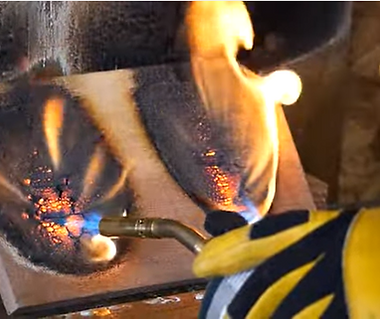
As wildfires continue to threaten communities throughout California and other fire-prone regions of the United States, homeowners are looking for practical ways to improve the fire resistance of their properties. While no paint can make a home completely fireproof, specialized fire-retardant coatings can provide an additional layer of protection that may help slow the spread of flames and reduce fire damage.
Among the products available today are coatings such as Firecoat and the fire-resistant coatings offered by Specialty Coating of California. These products are designed specifically to improve the fire performance of building materials and can be used as part of a broader wildfire preparedness strategy.
What Are Fire-Retardant Paints?
Fire-retardant paints and coatings are specially formulated products that help inhibit the ignition and spread of fire. Unlike conventional exterior or interior paints, these coatings contain additives that react when exposed to high temperatures.
Many fire-retardant coatings are known as “intumescent” coatings. When exposed to extreme heat, they expand dramatically, forming a thick, insulating char layer. This char acts as a thermal barrier, helping protect the underlying surface from direct flame exposure and slowing the transfer of heat.
Other fire-retardant coatings work by releasing water vapor or non-combustible gases when heated. These gases help cool the surface and dilute the oxygen available to support combustion.
How Do They Work?
When a wildfire approaches a home, heat and embers are often the primary causes of ignition. Wind-driven embers can travel miles ahead of the main fire front and ignite combustible surfaces such as wood siding, decks, fences, and eaves.
Fire-retardant coatings help in several ways:
1. Slowing Ignition
The coating makes it more difficult for heat to raise the underlying material to its ignition temperature. This delay can be critical during a fast-moving wildfire.
2. Reducing Flame Spread
If ignition does occur, the coating can slow the spread of flames across the surface, reducing the speed at which a fire grows.
3. Providing Thermal Insulation
Intumescent coatings swell into a thick char when heated, insulating wood and other materials from extreme temperatures.
4. Limiting Structural Damage
By delaying combustion and reducing heat transfer, fire-retardant coatings may help preserve structural components long enough for firefighters to intervene or for the fire front to pass.
Where Can They Be Applied?
Depending on the manufacturer’s specifications, fire-retardant coatings may be used on:
-
Wood siding
-
Fascia boards
-
Eaves and overhangs
-
Decks and railings
-
Fences
-
Garages and outbuildings
-
Interior walls and ceilings
-
Structural wood members
Homeowners should always follow manufacturer recommendations regarding approved surfaces and application methods.
How is Fire Retardant Paint Applied?
Firecoat paint is a base coat that can be covered with any top exterior paint in a color of your choice. Usually you do not have to strip all the existing paint from your house before applying Firecoat, provided that the existing paint is:
-
Firmly adhered to the surface
-
Not peeling, flaking, blistering, or chalking excessively
-
Clean and free of dirt, mildew, grease, and loose material
Typical preparation involves:
-
Scraping and sanding any loose or peeling paint.
-
Cleaning the surface thoroughly.
-
Repairing damaged wood or siding as needed.
-
Priming bare wood or other exposed substrates where recommended.
-
Applying the Firecoat coating according to the manufacturer’s specifications.
The key is that Firecoat’s performance depends on good adhesion to the surface beneath it. If old paint is failing, Firecoat should not be applied over those areas until they are properly prepared.
Why They Make Sense in California
California’s wildfire seasons have become longer and more intense. Homes located near brush, canyons, open space, or wooded areas face increased risk from both direct flame contact and airborne embers.
Fire-retardant coatings can be particularly valuable because they:
-
Add protection without changing the appearance of the home.
-
Can be applied to existing structures.
-
Work continuously once properly installed.
-
Complement other fire-hardening measures.
-
May provide additional time before combustible materials ignite.
For homeowners in hillside communities, canyon neighborhoods, and the wildland-urban interface, every layer of protection can make a difference.
Not a Substitute for Other Fire Safety Measures
It is important to understand that fire-retardant paint is not a stand-alone solution. The most effective wildfire protection comes from combining multiple defensive measures, including:
-
Maintaining defensible space around the home.
-
Removing dead vegetation and brush.
-
Installing ember-resistant attic and foundation vents.
-
Using Class A fire-rated roofing materials.
-
Cleaning leaves and debris from gutters.
-
Replacing highly combustible landscaping near structures.
-
Installing dual-pane tempered glass windows where appropriate.
Fire-retardant coatings should be viewed as one component of a comprehensive wildfire-preparedness plan.
The Full Disclaimer:
The information above is for informational purposes only and should not be relied upon, and you should consult with appropriate advisors in making decisions with respect to the matters discussed above. The listing of the above vendors or any product or service provided by these vendors does not constitute or imply an endorsement, recommendation, or favoring by The Oaks Neighborhood Association, any member of its board of directors, or any other person or entity. It is your sole responsibility to independently verify the qualifications, references and suitability of any vendor or any product or service provided by any vendor. Neither The Oaks Neighborhood Association nor any member of its board of directors nor any other person is responsible or liable for any of the information above or any agreement, product, service or damage arising from your relationship with any vendor or any product or service provided by any vendor.